
BLOG
- Home
- Blog
- Silicone Rubber Introduction
- Key Elements of Waterproof Design! Material, Characteristics, and Applications of Rubber Grommets
Key Elements of Waterproof Design! Material, Characteristics, and Applications of Rubber Grommets
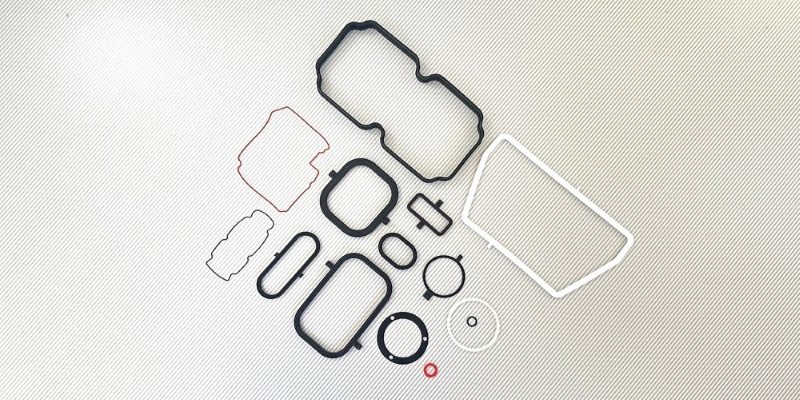
From everyday faucets and car engines to industrial machinery and aerospace equipment, rubber grommets are essential sealing components. Although seemingly ordinary, these products effectively prevent liquid leaks, gas escapes, and contamination, serving as the first line of defense for the safe operation of equipment.
This article will quickly guide you through the basic concepts, characteristics, applications, and material comparisons of rubber grommets, as well as key points for selection and maintenance. We will also introduce a quality supplier—GSUN to help you choose the most reliable sealing solutions.
What is Rubber Grommet? What Are the Functions of a Rubber Grommet?
A rubber grommet is a sealing component made from rubber or elastic polymer materials. Its purpose is to block the entry and exit of liquids, gases, dust, and foreign objects at system joints, while also absorbing vibrations, reducing wear, and extending the lifespan of parts. They are commonly found at equipment part junctions, wire passage holes, and mechanical connection surfaces. Rubber grommets are essential components in modern product designs for waterproofing, leak prevention, dustproofing, and vibration resistance.
〈Related Articles: Is Silicone Rubber Better Than Rubber?〉
Main Functions of Rubber Grommets
- Sealing: Fills gaps between equipment parts to prevent leakage of water, oil, gas, etc.
- Cushioning: Absorbs vibrations and shocks during equipment operation to avoid damage.
- Protection: Shields wires or pipes from being cut by metal edges, extending their service life.
- Compensation: Automatically compensates for minor deformations or tolerances between contacting surfaces to maintain a tight fit.
Rubber grommets are widely used in wire pass-throughs, electrical control modules, outdoor devices, and more. By combining structural design with material elasticity, they provide a simple yet effective waterproof sealing solution.
The 4 Main Features of Rubber Grommets
Rubber Grommets Feature 1: Excellent Sealing Performance
Rubber grommets possess outstanding elasticity and compression capabilities, allowing them to effectively fill tiny gaps between parts and prevent the infiltration of liquids, moisture, dust, or other contaminants into the equipment. Whether in static joints or dynamic movement environments, they provide stable and long-lasting sealing effects.
- Application Examples: Waterproof electronic devices, outdoor equipment, pipe fittings, and more.
Rubber Grommets Feature 2: Excellent Resilience
Rubber grommets have outstanding shape memory. Even after being compressed or deformed, they can return to their original shape. This feature provides a "dynamic compensation" sealing effect against joint changes caused by thermal expansion and contraction or external disturbances, effectively extending service life and maintaining protection.
- Additional Information: High-quality silicone or EPDM (ethylene propylene diene monomer) rubber materials exhibit especially superior rebound performance.
Rubber Grommets Feature 3: Corrosion and Oil Resistance
Rubber grommets, depending on their material composition, offer excellent resistance to various liquids and gases. For example, NBR (Nitrile Butadiene Rubber) provides outstanding oil and solvent resistance, while Viton can withstand high temperatures and chemical corrosion, making them ideal for use in mechanical, petrochemical, and energy environments.
Material Recommendations:
- For use in motor oil and hydraulic oil environments → Recommended: Nitrile Rubber (NBR)
- For high temperature and corrosive environments → Recommended: Fluorocarbon Rubber (Viton) or Silicone
〈Related Articles: FKM Rubber vs Silicone Rubber - Find Out Their Characteristics!〉
Rubber Grommets Feature 4: High Plasticity and Versatile Design Applications
Rubber grommets can be molded into various sizes and structures through mold forming, including flat types, mushroom head types, and reinforced lip types. They can also be combined with anti-disengagement designs, double-layer structures, or waterproof seals to meet a wide range of working condition requirements. This gives rubber grommets a high degree of flexibility in customized sealing designs.
- Design Extension: When used in conjunction with enclosure openings, male and female connectors, mounting brackets, etc., they can also be integrated to achieve waterproof ratings such as IP67/IP68.
〈Related Articles: Is compression molding recommended? Three directions to take you in-depth understanding.〉
〈Related Articles: All Types and Applications of Silicone Injection Molding〉
In Which Fields Can Rubber Grommets Be Used?
Rubber grommets are widely used across various industries and product designs. They enable tight connections between parts, reduce wear and tear, extend service life, and effectively prevent the leakage of liquids or gases. Because of these practical functions, rubber grommets have become an essential component in many assemblies.
〈Related Articles: The Application of Liquid Silicone Rubber in Seals and Gaskets〉
Rubber Grommets Application 1: Electrical Wiring
In electrical devices such as distribution panels, network junction boxes, outdoor lighting, and surveillance systems, rubber grommets are installed at cable entry points to effectively block moisture and dust from entering the enclosure, while also preventing cables from being damaged by friction against metal edges. Additionally, some products need to meet IP rating standards (such as IP67/IP68), and rubber grommets play a key role in achieving the sealing function.
- Common materials: Ethylene Propylene Diene Monomer (EPDM) rubber, Silicone
- Special requirements: Fire resistance rating, UV resistance, high and low temperature durability
Rubber Grommets Application 2: Automotive Industry
Rubber grommets are used in various areas of vehicles such as the engine compartment, door wiring harnesses, and chassis control modules to prevent oil and gas leaks, block moisture intrusion, and cushion wiring harnesses from vibration and displacement during driving. Especially in high-temperature and high-vibration environments, rubber grommet can maintain long-term stable sealing and protective functions.
- Common applications: vehicle lighting circuits, air conditioning systems, dashboard wiring passages
- Recommended materials: heat-resistant EPDM (ethylene propylene diene monomer) rubber, NBR (nitrile butadiene rubber), Viton (fluorocarbon rubber)
〈Related Articles: The Future of Liquid Silicone in Automotive Applications〉
Rubber Grommets Application 3: Medical Equipment
In medical devices such as ventilators, diagnostic instruments, and infusion systems, rubber grommet are responsible for sealing between tubing and housings, ensuring that gases or liquids do not leak, thereby maintaining equipment hygiene and operational safety. The materials used must meet medical-grade standards, featuring non-toxicity, high-temperature resistance, and chemical resistance.
- Application Features: Biocompatibility, antibacterial, odorless and tasteless
- Recommended Material: Medical Grade Silicone
〈Related Articles: Applications of Liquid Silicone Rubber in Medical Devices〉
〈Related Articles: Is Silicone Toxic? A Comprehensive Analysis of Silicone Safety〉
Rubber Grommets Application 4: Industrial Machinery
In industrial machinery and equipment, rubber grommet are used in hydraulic systems, pneumatic pipelines, motor seals, storage control valves, and other locations to provide pressure resistance, dust protection, and oil resistance. They effectively extend equipment lifespan and reduce maintenance frequency.
- High-stress environments require gaskets with high durability to prevent cracking or failure.
- Recommended materials: Nitrile Rubber (NBR) for oil resistance, Fluorocarbon Rubber (Viton) for high corrosion resistance, and Ethylene Propylene Diene Monomer (EPDM) for weather resistance.
〈Related Articles: Comprehensive Guide to Silicone Gaskets: Material Properties, Applications, and Design Essentials〉
Rubber Grommets Application 5: Aviation Equipment
The aerospace and aviation industries have extremely high reliability requirements for sealing components. Rubber grommet are commonly used in aircraft cabin pressure seals, wiring harness protection, hydraulic systems, and high-temperature parts. These products must withstand extreme temperature variations, resist UV radiation, and resist chemical corrosion to ensure flight safety and high-performance operation.
- Material selection must comply with aviation-grade standards (such as MIL, FAA)
- Recommended materials: high-performance fluororubber (such as Viton), high-temperature resistant silicone, specialty synthetic rubber
〈Related Articles: High-Temperature Silicone: Characteristics, Applications, and Buying Guide〉
What Are the Common Materials for Rubber Grommets?
Each type of rubber material has its own physical properties and limitations in terms of water resistance, weather resistance, elasticity, and chemical resistance. Therefore, different application environments require selecting different rubber materials to achieve optimal waterproofing and durability. Below is a comparison of several common materials:
〈Related Product: GSUN Product Service〉
〈Related Articles: What You Should Know About Silicone Rubber〉
Common Rubber Grommet Material Comparison Chart
| Item | Silicone | EPDM | Viton (Fluororubber) | NBR (Nitrile Rubber) | NR (Natural Rubber) |
|---|---|---|---|---|---|
| Temperature Range | -50°C ~ +230°C |
-40°C ~ +125°C |
-20°C ~ +200°C |
-30°C ~ +100°C |
-20°C ~ +70°C |
| Water Resistance | ★★★★☆ | ★★★★☆ | ★★★★★ | ★★★☆☆ | ★★☆☆☆ |
| Weather Resistance | ★★★★☆ | ★★★★★ | ★★★☆☆ | ★★☆☆☆ | ★☆☆☆☆ |
| Elasticity | ★★★★☆ | ★★★☆☆ | ★★★☆☆ | ★★★☆☆ | ★★★★★ |
| Chemical Resistance | ★★★☆☆ | ★★★☆☆ | ★★★★★ | ★★★★☆ | ★★☆☆☆ |
| Applications |
|
|
|
|
|
(Swipe left or right to view the full table.)
How to Choose the Right Rubber Grommet? Key Tips for Selecting Rubber Grommets!
Rubber grommet are essential components in various machinery, construction, and electronic applications. Choosing the right rubber grommet ensures waterproofing, dustproofing, and durability. When selecting a rubber grommet, it’s important to consider the actual usage and environmental conditions comprehensively. The following factors should be taken into account:
- orking environment conditions (such as temperature range, humidity, UV exposure)
- Need for oil resistance or chemical corrosion resistance (e.g., industrial sites, automotive engine compartments)
- Wire or hole dimensions (ensuring proper fit and seal)
- Required IP rating (such as meeting IP67/IP68 standards)
- Need for dynamic sealing (if there is vibration or movement, choose fatigue-resistant materials)
Additionally, choosing a reliable supplier is a key factor that affects product quality and design success. In this regard, GSUN offers the following clear advantages:
- Extensive professional experience: Years of expertise in rubber parts R&D and custom manufacturing, with deep understanding of waterproof sealing needs across industries
- Diverse and comprehensive product range: Provides customized and varied rubber grommet to meet different application scenarios.
- Complete technical support: Equipped with a professional engineering team to assist customers with selection, design evaluation, and custom development.
- Stable and reliable quality: Uses high-quality raw materials, strictly controls production SOPs, conducts regular staff training, employs professional quality inspection instruments, and holds multiple ISO quality certifications to maintain product stability and consistency.
- Fast delivery and flexible manufacturing: Adapts to customer schedules and production volumes, offering flexible responses from prototyping to mass production.
If you are looking for a stable and reliable waterproof rubber grommet solution for your products, feel free to contact us. GSUN will be your most trustworthy partner.
〈Related Articles: 4 Tips for Choosing A Silicone Rubber Suppliers〉
Maintenance and Inspection Key Points for Rubber Grommets
To ensure the long-term effectiveness of the sealing and protective functions of rubber grommet, in addition to replacing them regularly according to the manufacturer's recommendations, regular inspections and simple tests should also be conducted. This helps to detect any cracks, hardening, or other signs of aging early on. The following maintenance points are recommended:
- Regularly check for wear and aging signs (such as cracks, hardening, or peeling)
- Avoid contact with volatile solvents or strong acids and alkalis
- Avoid prolonged exposure to high temperatures and ultraviolet light
- Avoid excessive pulling or compression deformation during installation
- For systems with frequent plugging and unplugging, choose fatigue-resistant designs
Proper maintenance of rubber grommet not only enhances waterproof performance but also extends the lifespan of cables and systems. A stable sealing effect effectively prevents moisture, dust, or oil from penetrating electronic or mechanical devices, reducing maintenance frequency and failure risks. This further minimizes operational downtime and maintenance costs, improving the overall reliability and service life of the system.
Conclusion
Through this article, we have gained an in-depth understanding of the basic definition, characteristics, application scenarios, commonly used materials, and key points for selection and maintenance of rubber grommet. Choosing the right gasket material and structure not only helps products pass rigorous IP rating tests but also ensures stable sealing performance under extreme weather conditions and prolonged operation.
In this field, GSUN has many years of experience in the research, development, and production of rubber grommet, focusing on customized sealing solutions and high-quality delivery. If you are looking for a professional, reliable, and trustworthy rubber grommet supplier, GSUN is your best choice. Feel free to contact us anytime for technical consultation. We will assist you in finding the most suitable sealing solution to enhance your product’s performance and upgrade its safety!
〈Related Articles: What is eco-friendly silicone? An analysis of its 4 key material advantages and applications!〉
〈Frequently Questions: Knowledge About Silicone Rubber〉

GSUN
GSUN has over 30 years of experience in silicone manufacturing, offering advanced technology and fully integrated in-house production from tooling to delivery. Serving automotive, medical, and industrial sectors, GSUN is ISO-certified and committed to delivering high-quality solutions and industry leadership.
Article Classification
Recent Articles
- What You Should Know About Silicone Rubber
- What Is Eco-Friendly Silicone? Pros, Cons, Uses & Recycling
- How to choose between TPE and Silicone Rubber? Find out their respective characteristics!
- Silicone Manufacturing Explained: Processes, Applications, and 4 Tips for Choosing a Partner
- What Is Silicone Rubber? A Guide to Types, Common Applications, and Custom Processing