
BLOG
- Home
- Blog
- Silicone Rubber Introduction
- Mastering EPDM Rubber: A Complete Guide to Applications, Material Grades, and B2B Solutions
Mastering EPDM Rubber: A Complete Guide to Applications, Material Grades, and B2B Solutions
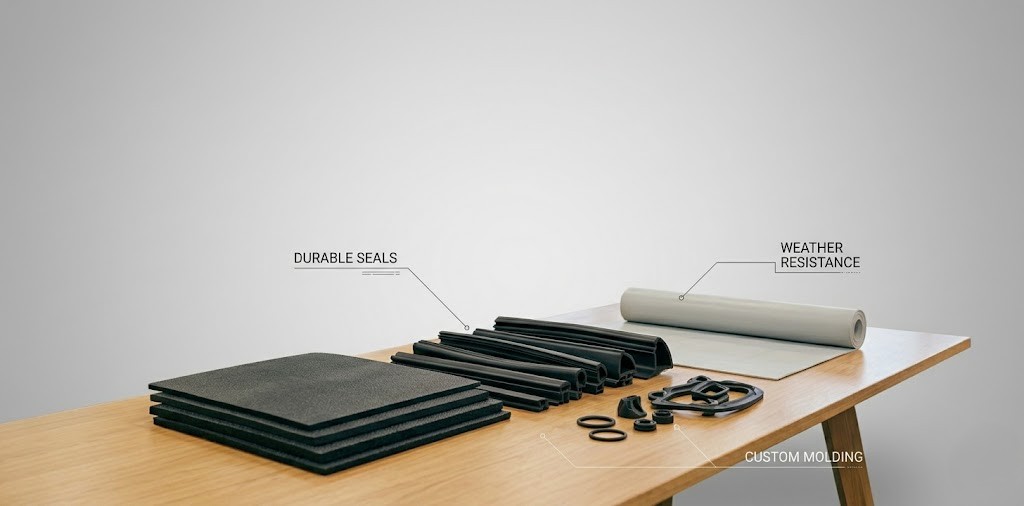
EPDM (Ethylene Propylene Diene Monomer) rubber is a widely used synthetic elastomer for sealing and weather-resistant applications in industrial environments.
It is widely selected in B2B engineering projects due to its long-term durability, stable sealing performance, and resistance to environmental exposure such as UV, ozone, and moisture.
In typical engineering applications, EPDM is often chosen when long service life and outdoor reliability are required.
Depending on formulation, EPDM compounds can be designed to comply with ASTM D2000 specifications and ISO 1629 classification standards. This makes it suitable for OEM and industrial procurement requiring consistent material performance and compliance assurance.
What is EPDM Rubber and Why Engineers Choose It?
EPDM rubber is a synthetic elastomer with a saturated polymer backbone. This molecular structure gives it excellent resistance to heat, ozone, and weathering. Engineers often specify EPDM rubber for applications that require strong aging resistance and vibration damping. Because its main chain contains very few double bonds, it remains durable under heat and oxygen exposure, making it a reliable choice for long-term outdoor and industrial applications.
〈Extended reading: Applications of Liquid Silicone Rubber Injection Molding in smart clothing〉
Key Performance Benefits of EPDM Rubber Materials
The primary advantage of EPDM rubber is its excellent performance in harsh environments without significant degradation. Its saturated polymer backbone provides strong resistance to UV radiation, extreme temperatures, and many forms of chemical exposure. Unlike many general-purpose rubbers that may harden, crack, or lose flexibility over time, EPDM helps maintain sealing performance in demanding conditions, supporting airtight and watertight operation throughout its service life.
〈Extended reading: High-Temperature Silicone: Characteristics, Applications, and Buying Guide〉
Unmatched UV and Ozone Resistance
EPDM rubber offers excellent resistance to UV rays and ozone, making it a preferred material for outdoor applications such as window gaskets, roofing membranes, and solar panel seals. While some rubbers may harden or crack after prolonged exposure to the elements, EPDM retains its flexibility and helps reduce the risk of premature seal failure in exterior installations.
Thermal Range: From -50°C to +150°C
Depending on the compound formulation, EPDM rubber can offer a broad operating temperature range, often suitable for applications exposed to approximately -50°C to +150°C. It helps resist brittleness in cold conditions and supports sealing performance under elevated temperatures. This stability is valuable for equipment operating in fluctuating climates or demanding industrial environments.
Low Permeability and Weatherproofing
EPDM rubber’s low permeability helps resist moisture and air infiltration, making it well suited for weatherproof sealing applications. By reducing water ingress and gas migration, it helps protect internal components from environmental exposure. As a result, EPDM is widely used in construction and automotive applications where long-term weather resistance is important.
Common Industrial Applications for EPDM Rubber
Thanks to its versatility, EPDM rubber is used across a wide range of industries. Selecting the appropriate EPDM grade ensures that your sealing solution is optimized for your specific operating conditions.
Automotive: Seals and NVH Reduction
Used extensively in door seals and coolant hoses, EPDM rubber plays a key role in reducing NVH (Noise, Vibration, and Harshness). It helps dampen road noise and mechanical vibration, significantly improving cabin comfort.
〈Extended reading: The Future of Liquid Silicone in Automotive Applications>〉
Construction: Membranes and Expansion Joints
In architecture, EPDM rubber is the go-to material for roofing and expansion joints. Its high elongation allows it to stretch and contract with a building’s thermal movement while maintaining a reliable waterproof seal.
HVAC/R: Vibration and Airflow Sealing
For heating and cooling systems, EPDM rubber provides durable seals that withstand constant temperature cycling and compressor vibration, helping to maintain energy efficiency and prevent refrigerant or air leaks.
〈Extended reading: The Application of Liquid Silicone Rubber in Seals and Gaskets〉
Material Comparison: EPDM Rubber vs. Other Elastomers
Selecting the right rubber involves balancing performance with cost. The table below outlines how EPDM rubber compares to other common elastomers to help you make an informed decision.
EPDM vs. Nitrile: Polar Solvents vs. Oil
NBR is a preferred material for applications involving oil and fuel contact. However, for hot water, alcohol, or polar solvents, EPDM rubber is generally the superior choice.
EPDM vs. Silicone: Heat and Cost Efficiency
Silicone excels in extreme temperature environments; however, EPDM rubber provides a more cost-effective solution for standard industrial applications, with the added benefit of higher tear resistance.
EPDM vs. Neoprene: Weathering vs. Flame Retardancy
While Neoprene excels in flame retardancy, EPDM rubber offers superior long-term resistance to UV and ozone, making it the better choice for outdoor applications.
Comparison Table: EPDM vs. Common Elastomers
| Material/ Feature |
EPDM | Nitrile (NBR) | Silicone (VMQ) | Neoprene (CR) |
|---|---|---|---|---|
| Primary Strength | Weather/UV Resistance | Oil & Fuel Resistance | Extreme Temp Range | Flame Retardancy |
| Temp Range | -50°C to +150°C | -30°C to +120°C | -60°C to +230°C | -40°C to +120°C |
| Oil Resistance | Poor | Excellent | Fair | Moderate |
| UV Resistanc | Excellent | Poor | Excellent | Good |
| Typical Application | Outdoor Seals/HVAC | Fuel Lines/O-rings | Medical/High-Heat | Marine/Gaskets |
| Cost Efficiency | High | Moderate | Low | Moderate |
(Scroll horizontally to view the full table on mobile)
Technical Selection Criteria for EPDM Rubber Projects
To get the most out of EPDM Rubber, technical specifications must be matched to the application. Factors like density, curing method, and hardness play a vital role in performance.
Material Density: Solid vs. Sponge EPDM
Solid EPDM rubber is commonly used in applications requiring higher mechanical strength and stable sealing performance under pressure. It offers better resistance to deformation, making it suitable for industrial gaskets, outdoor sealing systems, and heavy-duty applications.
Sponge (cellular) EPDM rubber has a lighter structure with higher compressibility and flexibility. It is widely used for gap filling, vibration damping, acoustic insulation, and weatherstripping where uneven surfaces or lightweight sealing solutions are required. Its softer structure also helps improve cushioning and installation tolerance.
Sulfur vs. Peroxide Curing Systems
Sulfur curing systems are widely used due to their cost efficiency, good elasticity, and strong mechanical performance. They are suitable for many general-purpose sealing and industrial rubber applications where moderate temperature resistance is sufficient.
Peroxide curing systems provide significantly better heat resistance, aging stability, and lower compression set, allowing seals to maintain their shape and recovery performance after long-term compression. They are often preferred for automotive, outdoor, and high-temperature applications that require extended service life and cleaner material performance.
Matching Shore Hardness to Sealing Force
Selecting the appropriate Shore hardness plays an important role in sealing performance, assembly feel, and long-term product reliability. Softer EPDM materials compress more easily and conform better to uneven surfaces, making them suitable for low clamping force designs or applications requiring improved flexibility.
Higher hardness grades provide better resistance to deformation and extrusion under mechanical stress, helping maintain sealing stability in demanding environments. They are commonly used in industrial equipment, outdoor enclosures, and applications exposed to repeated compression or higher operating pressure.
In custom rubber component manufacturing, Shore hardness selection should be evaluated together with product geometry, sealing force, environmental conditions, and expected service life to achieve balanced performance and durability.
Preventing Failure and Extending EPDM Rubber Longevity
Preventing premature failure of EPDM rubber components depends largely on proper material selection, correct installation practices, and awareness of operating conditions. Early signs of degradation such as surface hardening, loss of elasticity, or minor cracking should be monitored during routine inspections. Proper handling and installation can significantly extend service life and maintain sealing performance throughout the product lifecycle.
Installation Tips to Prevent Seal Failure
During installation, avoid excessive stretching, twisting, or uneven compression of the rubber component. Ensure all mating surfaces are clean and free from dust, oil, or debris, as contamination can create leakage paths or localized stress points. Proper alignment and controlled assembly force help prevent early mechanical damage and ensure consistent sealing performance.
Chemical Incompatibility: Avoiding Oil Damage
EPDM rubber is not compatible with petroleum-based oils, fuels, or lubricants. Exposure to these substances may cause swelling, softening, and loss of mechanical strength. For applications involving mixed media environments, it is important to fully evaluate chemical exposure conditions to prevent premature material failure.
Diagnostic Signs of Premature Aging
Common signs of EPDM aging include surface cracking, hardening, loss of elasticity, or powder-like residue on the material surface. These symptoms indicate that the material structure has begun to degrade and sealing performance may be compromised. Regular inspection and timely replacement are recommended to prevent unexpected leakage or system failure.
Why Choose Glory Sun Group for Custom EPDM Rubber Solutions?
With over 30 years of manufacturing experience, Glory Sun Group provides comprehensive OEM solutions for custom rubber components. Our capabilities cover mold design and development, precision production, and strict quality inspection throughout the entire manufacturing process. Supported by multiple international certifications, we ensure consistent quality and reliability for demanding applications. We specialize in supplying high-performance silicone rubber and EPDM parts for industries such as automotive, industrial equipment, and medical applications, delivering stable and scalable manufacturing support for global partners.
〈Extended reading: How to Choose a High-Quality Silicone Manufacturer? 4 Key Evaluation Factors + A Complete Guide to the Collaboration Process〉
Conclusion
EPDM rubber remains a reliable material choice due to its excellent weather resistance, durability, and long-term sealing stability. However, achieving optimal performance depends on proper material selection, design consideration, and manufacturing quality. With precise engineering and controlled production processes, service life can be significantly extended while reducing maintenance costs. For industrial sealing systems, working with an experienced manufacturing partner ensures consistent quality and dependable performance across a wide range of applications.
If you are developing custom rubber sealing components or evaluating material and design requirements for your application, please feel free to contact us . Glory Sun Group is ready to support your product development with engineering expertise and reliable manufacturing solutions.

GSUN
GSUN has over 30 years of experience in silicone manufacturing, offering advanced technology and fully integrated in-house production from tooling to delivery. Serving automotive, medical, and industrial sectors, GSUN is ISO-certified and committed to delivering high-quality solutions and industry leadership.
Article Classification
Recent Articles
- What You Should Know About Silicone Rubber
- What Is Eco-Friendly Silicone? Pros, Cons, Uses & Recycling
- How to choose between TPE and Silicone Rubber? Find out their respective characteristics!
- Silicone Manufacturing Explained: Processes, Applications, and 4 Tips for Choosing a Partner
- What Is Silicone Rubber? A Guide to Types, Common Applications, and Custom Processing