
BLOG
- Home
- Blog
- Silicone Rubber Introduction
- Car Keypads Unpacked: Why Silicone is the Optimal Material Choice
Car Keypads Unpacked: Why Silicone is the Optimal Material Choice
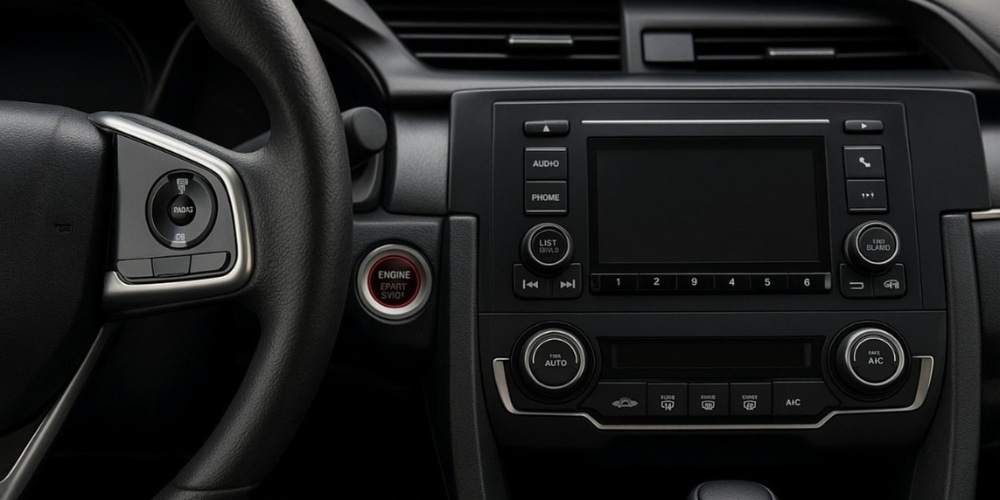
Modern vehicle interior design is becoming increasingly intelligent. In-car keypads are no longer mere operating devices but have evolved into the primary interface for communication between the driver and the vehicle. From the engine start button and driving mode selector to steering wheel controls and multi-function buttons on the center console, every symbol and location serves a specific, indispensable purpose. Selecting the appropriate material is crucial for ensuring the performance and durability of car keypads. This article will introduce common car keypads and explore the advantages of silicone materials.
〈Related Article:How is silicone rubber molded?〉
What are Car Keypads?
Almost every driver interacts with various buttons in their car daily—from rolling down windows and locking doors to adjusting music volume. These seemingly small components are the operational hub of the entire vehicle. Since in-car operations such as adjusting air conditioning, checking tire pressure, and controlling volume directly affect driving comfort and safety, the internal components of car keypads must possess excellent durability and stability. Beyond basic functionality, these keys also require the appropriate tactile feel and feedback to allow the driver to operate them quickly and accurately while driving. Therefore, the internal design and material selection for car keypads have a significant impact on the overall user experience and driving safety.
〈Related Article:The Future of Liquid Silicone in Automotive Applications〉
Car Keypad Type 1: Door Control Panel
Functions such as window lift, door lock, and rearview mirror adjustment are used daily by drivers, so the keypads need to have high durability and provide stable feedback upon pressing. They must also prevent dust and moisture from entering the vehicle's interior through the key gaps, which could affect the circuit. When car doors are exposed to high temperatures, sunlight, or humid environments, the keypad's weather resistance and UV resistance become vital. It is essential to choose materials that will not easily age, harden, crack, or lose elasticity due to long-term use or sun exposure.
Car Keypad Type 2: Instrument Touch Panel
The instrument touch panel is one of the most frequently used interfaces by the driver while operating the vehicle, serving for driving information setup, instrument display switching, or headlight system control. Therefore, the precision and visual coordination of the keypads greatly influence driving safety. Drivers often rely on differences in the keys' thickness, shape, surface texture, and haptic feedback to perform operations without looking at the keypads (blind operation). At the same time, the light transmittance of the instrument panel keypads must ensure clear visibility at night to enhance driving safety.
Car Keypad Type 3: Overhead Reading Light
The buttons located on the upper interior of the car are mainly used to control cabin lighting and sometimes for the ambient light or sunroof switch. Although they are not used as frequently as the door or steering wheel controls, their tactile quality and quiet performance are paramount. The material characteristics should ensure that the lights can be switched on or off at night without a harsh "click" sound, allowing for softer and quieter operation. Furthermore, they must withstand temperature and humidity variations within the cabin to prevent circuit damage.
Car Keypad Type 4: Steering Wheel Controls
The small buttons on the steering wheel are the most frequently touched by the driver. Operations such as switching music, answering calls, or activating voice control are often performed while driving, making the tactile feel (haptics) of the keypads extremely important. If the rebound is too soft, it can lead to accidental presses; if too hard, it can distract the driver. Thus, the buttons on the steering wheel must facilitate "blind operation", allowing the driver to use them without looking down at their location. The material chosen for the steering wheel keypads should have elasticity and resilience to ensure every press is clearly perceptible, preventing misoperation. Additionally, as the steering wheel is constantly exposed to sunlight and temperature changes, the keypad material must also possess heat and UV resistance.
.jpg)
What Are the Common Car Keypad Materials?
1. Silicone
Silicone is suitable for a wide range of climate environments, maintaining stable elasticity regardless of hot or cold weather, which is why it is widely used for car keypads. Silicone is inherently non-toxic, odorless, and naturally decomposable, aligning with modern trends in plastic reduction and sustainability. Furthermore, it is resistant to aging, wear, and chemical erosion, meaning it is unlikely to deform or fade after long-term use. It can also be precisely molded to create various shapes and details, balancing aesthetics and function, making it the premier choice for car keypads.
〈Related Article:Is Silicone Toxic? A Comprehensive Analysis of Silicone Safety〉
2. Rubber
Rubber keypads are primarily made from natural or synthetic rubber and possess a certain degree of elasticity and anti-slip effect, with a relatively lower cost. However, rubber is susceptible to environmental factors. Long-term exposure to high temperatures and UV radiation causes the keypads to gradually age, harden, or crack. Consequently, its proportion in automotive products is gradually decreasing.
〈Related Article:What is the common elastomeric silicone? here is some tips you can't miss out〉
3. TPE (Thermoplastic Elastomer)
TPE offers good moldability and can be recycled. However, its high-temperature resistance and anti-aging performance are significantly inadequate. In prolonged sun exposure or high-temperature cabin environments, TPE is prone to becoming tacky on the surface, deforming, hardening, or even cracking. Moreover, TPE's rebound force and tactile stability are inferior to silicone, often leading to fatigue deformation or inconsistent feel after a period of use, making it difficult to meet the high and consistent quality requirements for car keypads.
〈Related Article:How to choose between TPE and Silicone Rubber? Find out their respective characteristics!〉
Car Keypad Materials: Silicone, Rubber, TPE Comparison Table
| Material | Advantages | Disadvantages |
|---|---|---|
| Silicone |
|
|
| Rubber |
|
|
| TPE |
|
|
(Swipe left or right to view the full table.)
〈Related Article: Comprehensive Guide to Silicone Gaskets: Material Properties, Applications, and Design Essentials〉
Key Features of Silicone Car Keypads
1. Reliable Operation in High-Temperature Environments
The first thing you feel when returning to a car parked under the summer sun is the intense heat. If the car keypad material is not heat-resistant, it will quickly become sticky or fade, which is one reason silicone stands out. Silicone's high-temperature resistance ensures that even after a full day of sun exposure, the keypads will function normally without deforming or losing elasticity. Even if the interior temperature exceeds 60℃, silicone keypads will remain functional, and pressing them will still provide ample feedback.
〈Related Article: High-Temperature Silicone: Characteristics, Applications, and Buying Guide〉
2. Retains Rebound Performance After Long-Term Use
Even with long-term use, silicone keypads maintain excellent elasticity and rebound feel, effectively extending the lifespan of the car keypads and preserving a high-quality operating experience. A car owner using the audio volume or A/C control keys daily will find that even years later, the silicone keypads still offer a crisp rebound feel, without becoming mushy or failing.
〈Related Article: Cultivating a Deeper Understanding of Silicone Hardness〉
3. Water and Dust Resistance
Silicone's strong sealing properties effectively prevent moisture and dust from entering the car's internal circuitry, ensuring the keypads operate stably and avoid malfunctions caused by environmental factors. If a drink is accidentally spilled and some liquid splashes onto the center console, the waterproof design of the silicone keypads can block moisture penetration into the car's interior, ensuring the system functions normally.
〈Related Article: The Key to Waterproof Design! An Overview of Rubber Gasket Materials, Properties, and Applications!〉
〈Related Article: Why silicone rubber can be your best choice?〉
Glory Sun Group: A Leader in Silicone Car Keypads
Glory Sun Group leverages its extensive technical expertise in the field of silicone materials, consistently focusing on the R&D and manufacturing of high-quality silicone components since its establishment. In 2007, we passed the ISO/TS16949 Automotive Quality Management System certification, reaching international quality standards. Over the years, with professional silicone keypad design, precision mold development, and efficient production capabilities, Glory Sun Group has successfully become the preferred partner for many well-known domestic and international automotive brands. From product development and process control to rapid delivery, every stage demonstrates Glory Sun Group 's excellence in technological innovation, quality stability, and market competitiveness, committed to providing clients with the most reliable solutions.
〈Related Article: All Types and Applications of Silicone Injection Molding〉


Conclusion
As automotive technology rapidly advances, the design details and material selection of car keypads—as the critical human-machine interface—become even more important. Silicone has become the material of choice for modern car keypads due to its excellent durability, elasticity, tactile feel, and anti-aging properties, simultaneously meeting the demands for comfortable operation and long-term use. If you are seeking a high-quality car keypad solution with professional design and stable manufacturing capabilities, Glory Sun Group, with its years of industry experience and rigorous quality management, is your most trusted partner. Feel free to contact us to learn more about our products and customized services.
For further information or a quote, please use the【Contact Us】 link.
〈Related Article: Medical Grade Silicone: Definition, Applications, and Benefits〉

GSUN
GSUN has over 30 years of experience in silicone manufacturing, offering advanced technology and fully integrated in-house production from tooling to delivery. Serving automotive, medical, and industrial sectors, GSUN is ISO-certified and committed to delivering high-quality solutions and industry leadership.
Article Classification
Recent Articles
- What You Should Know About Silicone Rubber
- What Is Eco-Friendly Silicone? Pros, Cons, Uses & Recycling
- How to choose between TPE and Silicone Rubber? Find out their respective characteristics!
- Silicone Manufacturing Explained: Processes, Applications, and 4 Tips for Choosing a Partner
- What Is Silicone Rubber? A Guide to Types, Common Applications, and Custom Processing