
ブログ
Painting Silicone Technology: Optimizing Color Coverage and Laser Etching Performance
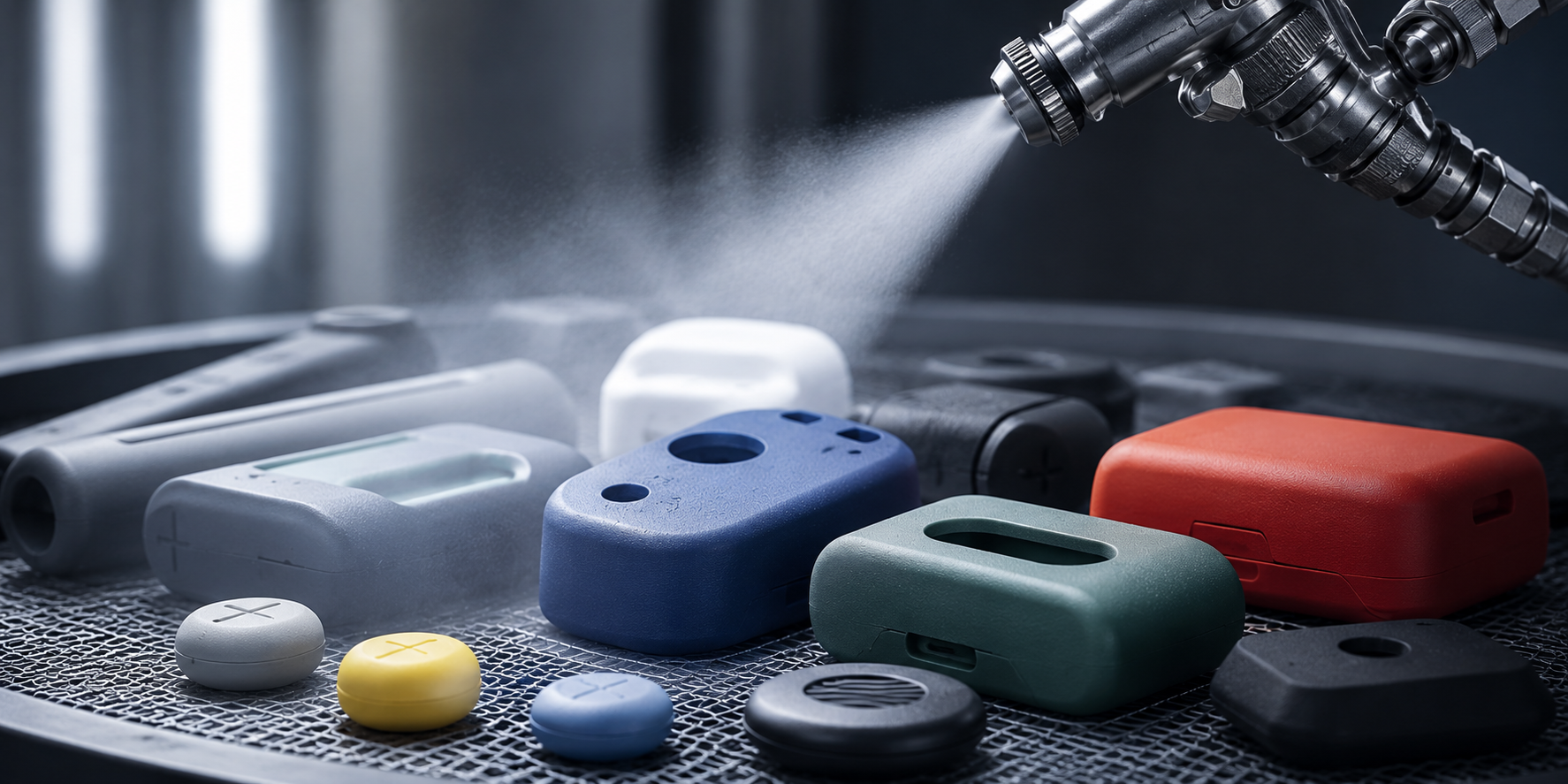
Silicone offers excellent flexibility, weather resistance, and temperature stability, but its naturally low surface energy makes paint adhesion challenging. As a result, painting silicone requires specialized surface preparation, coating materials, and process control to achieve reliable adhesion and consistent appearance. For products requiring backlit keypads, laser etching, or light-blocking functions, silicone painting is an essential manufacturing step. This article explores the science behind painting silicone, from coating technology and industrial spray processes to laser etching applications, helping engineers and sourcing professionals optimize product design and manufacturing performance.
〈Related Articles: How to choose between TPE and Silicone Rubber? Find out their respective characteristics! 〉
〈Related Articles: High-Temperature Silicone: Characteristics, Applications, and Buying Guide 〉
Applications of Painted Silicone
In advanced manufacturing industries, painting silicone is used not only to provide color but also to create an opaque base layer for light blocking and laser etching. A uniform coating enables precise laser etching while preventing unwanted light leakage from internal LEDs, ensuring both functional performance and premium product appearance.
1. Medical and Consumer Electronics
Painting silicone is widely used for handheld medical device panels, communication equipment, gaming keyboards, remote controls, and wearable device keypads. These user interfaces require uniform color, consistent appearance, and accurate brand color matching. For backlit products, the painted surface also serves as the base layer for laser etching, allowing icons and characters to illuminate clearly after laser processing.
〈Related Articles: Behind the Scenes: Backlit Silicone Keypad Technology 〉
〈Related Articles: Medical Grade Silicone: Definition, Applications, and Benefits 〉
2. Automotive Interiors
Automotive dashboards, center console buttons, illuminated switches, rotary knobs, and other control interfaces commonly rely on painting silicone. An opaque black or colored coating is first applied to block light before laser etching removes selected areas to create illuminated symbols. Consistent coating quality helps prevent light leakage, color variation, and unclear etching edges, improving both appearance and nighttime visibility.
〈Related Articles: Car Keypads Unpacked: Why Silicone is the Optimal Material Choice 〉
3. Aerospace and High-Spec Interface
In aerospace equipment, military control panels, and other high-specification interfaces, clear and reliable markings are essential. Painting silicone provides a uniform opaque coating before laser etching creates precise characters and symbols. Consistent coating thickness is critical for achieving accurate laser etching while preventing optical interference, making process stability an important factor in high-reliability applications.
Why Painting Silicone Is Challenging?
Silicone has inherently low surface energy and excellent chemical inertness, making it difficult for conventional paints to adhere directly to its surface. Without proper surface preparation, coatings may suffer from poor adhesion, peeling, blistering, or localized delamination. For products requiring high light-blocking performance or subsequent laser etching, coating uniformity and adhesion are especially critical. Uneven coating thickness or insufficient adhesion can result in blurred laser-etched graphics, inconsistent light transmission, or unwanted light leakage, ultimately affecting both product appearance and functionality.
How OEMs Make Silicone Paint Last
Painting silicone requires far more than conventional spray painting. OEM manufacturers typically use coating systems specifically developed for silicone materials, combined with appropriate surface preparation such as cleaning, primers, flame treatment, or corona treatment to improve coating adhesion. After spraying, the coating is cured under controlled conditions to form a uniform, opaque layer that serves as the ideal base for subsequent laser etching, ensuring sharp graphics, clean edges, and consistent backlighting performance.
For products requiring greater wear resistance, stain resistance, or an improved tactile feel, a transparent coating is often applied after the laser etching process. This protective layer enhances scratch resistance, abrasion resistance, and surface durability while maintaining a smooth touch, helping the product retain its appearance and performance throughout long-term use.
Painting, Printing, vs. Coating
Although painting, printing, and coating are all surface finishing processes for silicone products, each serves a different purpose and is often used together in production. Painting provides full-surface color coverage, creates the base color, and forms the light-blocking layer required for subsequent laser etching. Printing is used to apply localized graphics such as logos, text, icons, and functional markings with high precision. Coating is typically applied after painting and laser etching to add a transparent protective layer that improves scratch resistance, stain resistance, wear resistance, and surface feel. Rather than replacing one another, these three processes are commonly combined into a complete manufacturing workflow, allowing manufacturers to choose the most suitable process combination based on product design and performance requirements.
Comparison: Painting vs. Printing vs. Coating
| Technical Indicator | Painting Silicone | Printing Silicone | Coating |
|---|---|---|---|
| Primary Purpose | Full-surface color coverage, light-blocking layer for laser etching | Logos, text, precise UI/UX graphics, markings | Surface protection, wear resistance, enhanced smooth/matte feel |
| Appearance | Colored paint (customizable to Pantone colors) | High-opacity ink (for specific graphic/pattern printing) | Typically clear, matte, or glossy protective layer |
| Viscosity | Lower viscosity for atomization & spray uniformity | Highest viscosity for precise pattern retention | Low-to-medium viscosity for consistent, fine thickness |
| Process Sequence | Early stage (pre-treatment before laser etching) | Mid-stage (printed directly on substrate or paint layer) | Final stage (seals and protects all underlying layers) |
(Swipe left or right to view the full table.)
Surface Prep for Painting Silicone
Proper surface preparation is one of the most important steps in painting silicone. Inadequate preparation can lead to poor paint adhesion, affecting light-blocking performance, laser etching quality, and overall product appearance. Because silicone naturally has low surface energy and may retain mold release agents after molding, manufacturers typically perform surface cleaning, primer application, or surface activation before painting. These treatments improve the bond between the coating and the silicone substrate, ensuring stable production and consistent product quality. Common preparation methods include:
- Primers and Surface Cleaning:Before painting silicone, any mold release agents, oil, dust, or other contaminants must be thoroughly removed. Otherwise, the coating may peel, blister, or show uneven color. A compatible silicone primer is then applied to improve paint adhesion, helping reduce defects and rework during mass production.
- Flame and Corona Treatment:Flame treatment and corona treatment temporarily increase the surface energy of silicone, allowing the paint to wet and bond to the surface more effectively. These activation methods are widely used before mass production to improve coating consistency and support high-quality laser etching results afterward.
What to Look for in a Painting Silicone Partner?
When selecting a painting silicone OEM partner, price should never be the only consideration. Consistent coating quality depends on the supplier's manufacturing capability, process control, and quality assurance system. Since coating adhesion directly affects laser etching quality, appearance consistency, and long-term durability, factors such as equipment precision, production environment, and inspection procedures are essential. Working with an experienced manufacturing partner helps reduce development risks while ensuring stable quality and reliable mass production.
〈Related Articles: How to choose between TPE and Silicone Rubber? Find out their respective characteristics! 〉
1. Advanced XY-Axis Automated Spraying Equipment
To improve coating consistency and minimize operator variation, professional painting silicone manufacturers commonly utilize advanced XY-axis automated spraying systems. By digitally controlling spray paths, speed, and coating volume, these systems produce highly uniform paint thickness across every part while reducing color variation, overspray, and light leakage. Uniform coating thickness is especially important for products requiring subsequent laser etching, as it directly affects etching clarity and backlight performance. At Glory Sun, automated spraying technology helps maintain consistent quality and high production yields throughout mass production.
2. Proven Reliability via RCA Abrasion Testing
A comprehensive inspection process is another key indicator of a reliable painting silicone supplier. In addition to visual inspection, painted parts are typically evaluated through RCA abrasion testing, adhesion testing, and other quality verification procedures to ensure the coating withstands real-world wear and repeated use. These tests help prevent paint peeling and surface damage after products reach the market. Glory Sun is equipped with professional RCA abrasion testing equipment and can perform verification according to customer requirements, ensuring consistent coating quality before mass production.
Painting Silicone FAQs
Does painted silicone peel off easily?
Without proper surface preparation, painted silicone can peel easily. However, professional manufacturing processes can significantly improve coating adhesion.
Because silicone has naturally low surface energy, coatings may blister or peel if the surface is not activated and properly primed. Complete surface preparation is essential for achieving durable coating performance.
What are the surface treatment options for silicone products?
The most common surface treatments include painting, printing, and coating.
Painting provides full-color coverage and a light-blocking layer for laser etching. Printing is used for logos and graphics, while coating improves scratch resistance, stain resistance, and surface feel. Premium products often combine all three processes.
〈Related Articles: How is surface treatment of silicone products processed? 〉
What surface preparation is required before painting silicone?
Proper surface cleaning, surface activation, and primer application are typically required before painting silicone.
These processes remove contaminants and increase the surface energy of silicone, allowing the paint to bond more effectively. Good preparation improves both coating durability and laser etching quality.
Does painting silicone provide scratch and smudge resistance?
Painting alone does not provide complete scratch or smudge resistance. A protective coating is typically required.
The painted layer mainly provides color coverage and a light-blocking base for laser etching. If scratch resistance, fingerprint resistance, stain resistance, or a smoother surface feel is required, a protective coating is typically applied after laser etching to enhance durability and surface protection.
How does real-world usage affect the durability of painted silicone products?
The durability of painted silicone depends heavily on the operating environment.
Repeated contact, abrasion, sweat, alcohol, cleaning agents, and UV exposure can all accelerate coating wear or discoloration. For products exposed to frequent use, applying a protective coating after laser etching helps improve wear resistance, chemical resistance, and long-term product durability.
Conclusion
Silicone painting is more than a cosmetic process—it is a critical foundation for light-blocking performance and high-quality laser etching results. Stable coating adhesion, consistent opacity, and reliable production quality all depend on proper surface preparation, precise painting processes, and comprehensive quality control. When selecting a painting silicone OEM partner, it is important to evaluate their automated spraying capabilities and validated inspection procedures. If you are developing silicone components that require painting, laser etching, or other surface finishing processes, feel free to contact us and share your product specifications with Glory Sun. Our engineering team is ready to provide professional process evaluation, customized manufacturing solutions, and reliable mass production support.
〈Related Articles: How to Choose a High-Quality Silicone Manufacturer? 4 Key Evaluation Factors + A Complete Guide to the Collaboration Process 〉

GSUN
GSUNはシリコーン製造において30年以上の経験を持ち、高度な技術と、金型製作から納品までを自社で完全に統合した生産体制を提供しています。自動車、医療、産業分野にサービスを提供するGSUNは、ISO認証を取得しており、高品質なソリューションの提供と業界におけるリーダーシップの確立に尽力しています。