
BLOG
- Heim
- Blog
- Produktion & Labor
- Bedrucken von Silikonteilen: Anwendungen und Druckverfahren
Bedrucken von Silikonteilen: Anwendungen und Druckverfahren
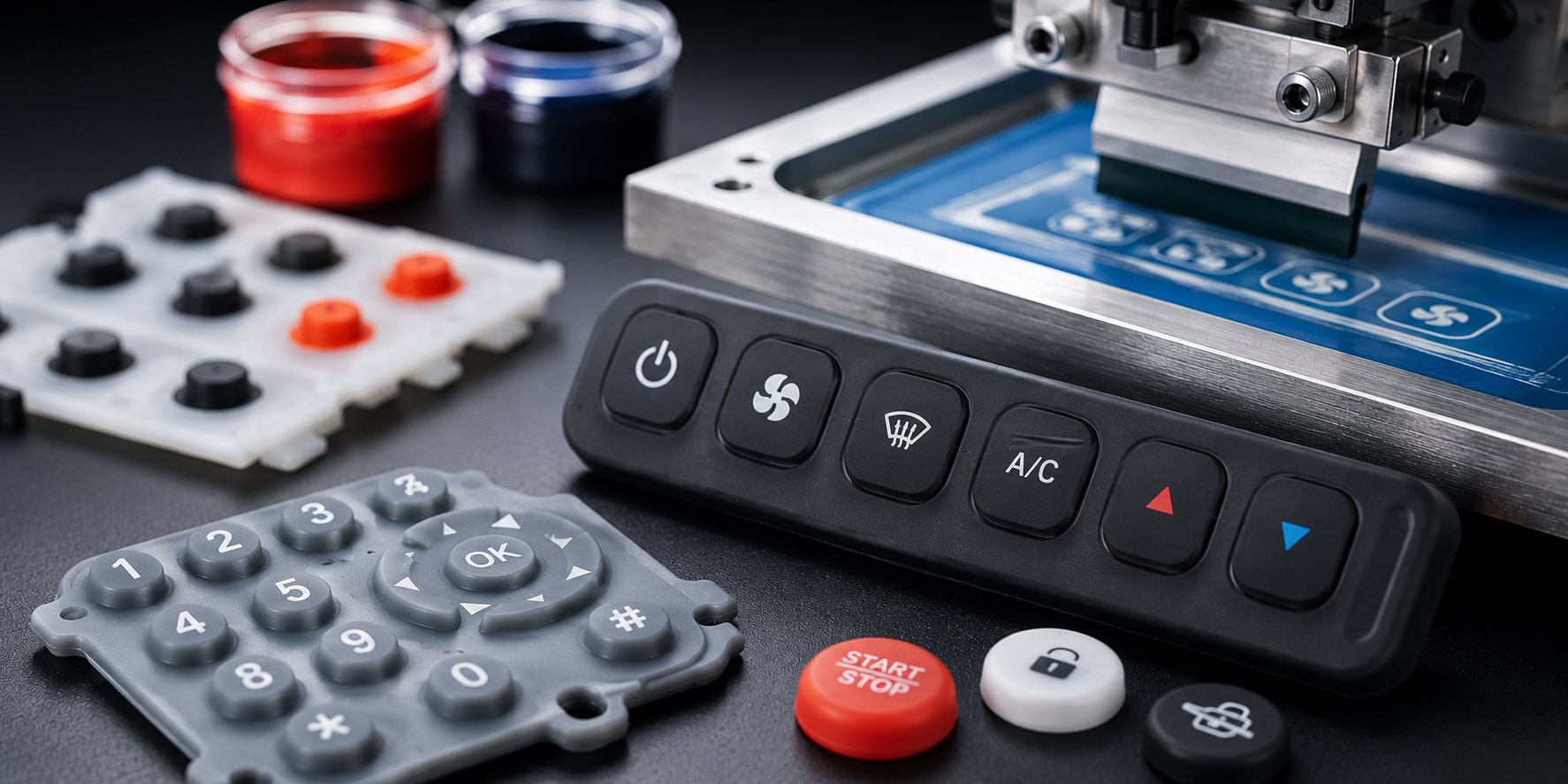
Silikon-Tastaturen, Bedienfelder, Dichtungen und andere Formteile aus Silikon werden häufig mit Logos, Symbolen, Legenden, Skalen und Produktkennzeichnungen bedruckt, um die Produktidentifizierung und die Benutzerfreundlichkeit zu verbessern. In diesem Artikel bezeichnet „Bedrucken von Silikon“ das Aufbringen von Grafiken oder Text auf die Oberfläche eines bereits geformten Silikonteils. Es bezieht sich nicht auf 3D-Druck oder additive Fertigung mit Silikonmaterialien. Die folgenden Abschnitte erläutern gängige Druckverfahren, geeignete Anwendungsbereiche, Aspekte der Tintenhaftung und die Auswahl des richtigen Oberflächenveredelungsverfahrens für unterschiedliche Produktanforderungen.
Bestätigen Sie Logo, Symbole, Farben, Abmessungen und Druckpositionen anhand der Kundenzeichnungen.
2. Prozessauswahl
Wählen Sie je nach Teilegeometrie, Grafikgröße, Produktionsvolumen und geforderter Druckgenauigkeit Siebdruck oder Tampondruck.
3. Oberflächenvorbereitung
Reinigen Sie das Silikonformteil, um Verunreinigungen oder Trennmittelreste zu entfernen. Gegebenenfalls kann eine zusätzliche Oberflächenbehandlung zur Verbesserung der Tintenhaftung durchgeführt werden.
4. Drucken und Aushärten
Die Silikontinte auftragen und unter kontrollierten Bedingungen aushärten lassen, um eine stabile Haftung und gleichbleibende Druckqualität zu erzielen.
5. Inspektion und Versand
Prüfen Sie die gedruckten Grafiken, die Ausrichtung, die Farben und das Gesamtbild. Bei Bedarf können vor dem Versand auch Haftungs- oder Abriebtests durchgeführt werden.
Was ist Drucken auf Silikon?
Der Druck auf Silikon ist ein Nachbearbeitungsverfahren, mit dem Texte, Symbole, Logos, Skalen oder andere Markierungen auf die Oberfläche von Silikonformteilen aufgebracht werden. Das Verfahren verbessert das Erscheinungsbild, das Branding und die Benutzerfreundlichkeit des Produkts, ohne dessen Abmessungen, Struktur oder mechanische Eigenschaften zu verändern. Je nach grafischer Komplexität, Teileform und Produktionsvolumen können verschiedene Druckverfahren und Tintensysteme ausgewählt werden.Bedrucken von geformten Silikonteilen
Eine Vielzahl von Grafiken und Funktionsmarkierungen lässt sich auf Formteile aus Silikon drucken, darunter Tastatursymbole, Bedienungsanleitungen, Markenlogos, Warnhinweise, Richtungspfeile, Funktionssymbole, Skalen und Produktkennzeichnungen. Diese Grafiken werden üblicherweise nach dem Formprozess aufgebracht, um eine präzise Positionierung und ein einheitliches Erscheinungsbild zu gewährleisten. Von Unterhaltungselektronik und Medizingeräten bis hin zu Industriesteuerungen und Kfz-Tastaturen verbessern bedruckte Silikonkomponenten sowohl die Ästhetik als auch die Benutzerfreundlichkeit.Bedrucken vs. Lackieren und Beschichten
Bedrucken, Lackieren und Beschichten sind gängige Oberflächenveredelungsverfahren für Silikonprodukte, die jedoch jeweils unterschiedlichen Zwecken dienen. Bedrucken wird zum Aufbringen von Logos, Texten und funktionalen Grafiken verwendet. Lackieren sorgt für eine flächendeckende Farbabdeckung, Lichtundurchlässigkeit oder dient als Grundierung für die nachfolgende Lasergravur. Beschichten wird als schützende Deckschicht aufgetragen, um die Verschleißfestigkeit, Fleckenbeständigkeit und Haptik zu verbessern. Das jeweils geeignete Verfahren hängt von den gewünschten Grafiken, der Produktfunktion und der Einsatzumgebung ab.Bedrucken, Lackieren und Beschichten von Silikonteilen
| Verfahren | Hauptzweck | Typische Verwendung |
| Drucken auf Silikon | Fügen Sie lokalisierten Text oder Grafiken hinzu. | Logos, Legenden, Symbole und Maßstäbe |
| Silikonfarbe | Ändern Sie die Grundfarbe oder blockieren Sie das Licht. | Vollfarbige Oberflächen und Vorbereitung für die Laserätzung |
| Silikonbeschichtung | Fügen Sie eine Silikonschutzfolie hinzu. | Oberflächenschutz, Haptik und reduzierte Staubaufnahme |
Druckverfahren auf Silikon
1. Siebdruck auf Silikon
Beim Siebdruck wird Farbe durch ein feinmaschiges Sieb auf die Oberfläche von Silikonformteilen übertragen. Das Verfahren eignet sich besonders für ebene oder leicht gewölbte Oberflächen und wird häufig zum Bedrucken von Texten, Bediensymbolen, Logos und größeren Grafikflächen eingesetzt. Es bietet eine hervorragende Farbdeckung, leuchtende Farben und eine hohe Produktionseffizienz und ist daher eine beliebte Wahl für Silikon-Tastaturen, Bedienfelder und industrielle Benutzeroberflächen.2. Tampondruck auf Silikon
Beim Tampondruck wird eine flexible Silikonauflage verwendet, um Farbe von einer gravierten Druckplatte auf geformte Silikonteile zu übertragen. Die elastische Auflage passt sich gekrümmten, konvexen, konkaven und unregelmäßigen Oberflächen an und eignet sich daher ideal für kleine Grafiken, feine Texte, Logos und präzise Symbole. Bei Bauteilen mit komplexen Formen oder schwer zugänglichen Druckbereichen bietet der Tampondruck eine höhere Flexibilität bei gleichzeitig exzellenter Druckqualität und -konsistenz.Siebdruck vs. Tampondruck für Silikonteile
| Faktor | Siebdruck | Tampondruck |
| Am besten geeignet für | Flache oder leicht gewölbte Oberflächen | Gebogene oder unregelmäßige Oberflächen |
| Gängige Grafiken | Legenden, größere Logos, Bedienfelder | Symbole, kleine Logos, einzelne Tasten |
| Hauptstärke | Deckt normale Oberflächen effizient ab | Erreicht komplexe Oberflächengeometrien |
| Gebräuchliche Verwendung | Flache Tastaturbereiche und Paneele | Gebogene Tasten und lokalisierte Markierungen |
Anwendungsbereiche für gedruckte Silikonteile
Silikondruck findet breite Anwendung bei Benutzeroberflächen und externen Bauteilen, um Logos, Symbole, Texte, Skalen und Funktionsmarkierungen auf Silikonformteile aufzubringen. Da diese Produkte häufig Druck, Reibung, Reinigung oder unterschiedlichen Umwelteinflüssen ausgesetzt sind, muss der Druckprozess neben einem klaren Erscheinungsbild auch zuverlässige Haftung und Langlebigkeit für eine dauerhafte Leistung gewährleisten.1. Silikon-Tastaturen und Bedienfelder
Silikontastaturen gehören zu den häufigsten Anwendungsbereichen für Silikondruck. Typische Grafiken umfassen Ein-/Ausschaltsymbole, Zifferntasten, Richtungssymbole, Modusanzeigen und Warnhinweise. Für flache Tastaturen eignet sich Siebdruck, während Tampondruck oft für gewölbte oder dreidimensionale Oberflächen bevorzugt wird. Bei hintergrundbeleuchteten Produkten kann der Druck auch mit Lackierung und Lasergravur kombiniert werden, um Leuchtbeschriftungen zu erzeugen.2. Automobil- und Industriesteuerungen
Bedrucktes Silikon findet breite Anwendung für Lenkradknöpfe, industrielle Bedienfelder, Tastaturen an Geräten und Instrumentenkomponenten. Da diese Teile während ihrer gesamten Lebensdauer wiederholt betätigt werden, muss der Druck eine ausgezeichnete Sichtbarkeit, starke Haftung und Verschleißfestigkeit gewährleisten, um die Beschriftung dauerhaft klar zu halten.3. Konsum- und Gesundheitsprodukte
Silikon wird häufig bedruckt, beispielsweise für Fernbedienungen, Wearables, elektronisches Zubehör und Medizintechnik. Die aufgedruckten Grafiken können Bedienungsanleitungen, Funktionssymbole oder Firmenlogos enthalten. Bei medizinischen Anwendungen sollten Materialverträglichkeit, Reinigungsmethoden und Validierungsanforderungen projektbezogen geprüft werden.Typischer Druckablauf
1. Überprüfung der KunstwerkeBestätigen Sie Logo, Symbole, Farben, Abmessungen und Druckpositionen anhand der Kundenzeichnungen.
2. Prozessauswahl
Wählen Sie je nach Teilegeometrie, Grafikgröße, Produktionsvolumen und geforderter Druckgenauigkeit Siebdruck oder Tampondruck.
3. Oberflächenvorbereitung
Reinigen Sie das Silikonformteil, um Verunreinigungen oder Trennmittelreste zu entfernen. Gegebenenfalls kann eine zusätzliche Oberflächenbehandlung zur Verbesserung der Tintenhaftung durchgeführt werden.
4. Drucken und Aushärten
Die Silikontinte auftragen und unter kontrollierten Bedingungen aushärten lassen, um eine stabile Haftung und gleichbleibende Druckqualität zu erzielen.
5. Inspektion und Versand
Prüfen Sie die gedruckten Grafiken, die Ausrichtung, die Farben und das Gesamtbild. Bei Bedarf können vor dem Versand auch Haftungs- oder Abriebtests durchgeführt werden.
Drucken auf Silikon – Häufig gestellte Fragen
Was ist Drucken auf Silikon?
Beim Bedrucken von Silikon werden Logos, Texte, Symbole oder Markierungen auf die Oberfläche eines bereits geformten Silikonteils aufgebracht. Es handelt sich um einen nachträglichen Bearbeitungsschritt, der die Form des Bauteils selbst nicht verändert.Ist Drucken auf Silikon dasselbe wie Silikon-3D-Druck?
Nein. Beim Bedrucken von Silikon werden Grafiken auf ein bereits geformtes Teil aufgebracht, während beim Silikon-3D-Druck ein komplettes Bauteil Schicht für Schicht aus Silikonmaterial aufgebaut wird. Es handelt sich um zwei völlig unterschiedliche Fertigungsverfahren.Welche Tinte eignet sich zum Bedrucken von Silikonteilen?
Für eine optimale Haftung und Haltbarkeit sind in der Regel spezielle Silikontinten erforderlich. Das Tintensystem sollte entsprechend dem Silikonmaterial, den Farbanforderungen und der Anwendungsumgebung ausgewählt werden.Können gekrümmte Silikonoberflächen bedruckt werden?
Ja. Siebdruck eignet sich möglicherweise für leicht gewölbte Oberflächen, während Tampondruck im Allgemeinen für stark gewölbte oder unregelmäßige Teile bevorzugt wird, da er Grafiken genauer überträgt.Kann Silikondruck mehrere Farben umfassen?
Ja. Allerdings erfordert jede Farbe in der Regel einen separaten Druck- und Aushärtungsschritt, sodass zusätzliche Farben üblicherweise die Produktionszeit und die Herstellungskosten erhöhen.Wie lange hält der Druck auf Silikon?
Die Haltbarkeit hängt vom Tintensystem, dem Aushärtungsprozess, den Betriebsbedingungen und der Umgebung ab. Bei Produkten, die häufigem Kontakt ausgesetzt sind, kann eine zusätzliche Beschichtung zur Verbesserung der Verschleißfestigkeit in Betracht gezogen werden.Welche Dateien werden für ein individuelles Angebot für Silikondruck benötigt?
Um ein genaues Angebot erstellen zu können, empfiehlt es sich, Teilezeichnungen oder 3D-Dateien, Vektorgrafiken (AI oder PDF), Druckpositionen, Farbanforderungen, Silikonmaterial, Produktionsmenge und Anwendungsdetails anzugeben.Individueller Silikondruck mit Glory Sun Group
Das optimale Silikondruckverfahren sollte anhand der Bauteilgeometrie, der Vorlage, der Anwendungsanforderungen und der gewünschten Haltbarkeit ausgewählt werden. Die Glory Sun Group bietet integrierte Fertigungsdienstleistungen an, darunter Silikonformen, Drucken, Lackieren, Lasergravieren und Beschichten. Dank unserer langjährigen Produktionserfahrung und stabilen Fertigungskapazitäten unterstützen wir unsere Kunden bei der Optimierung der Produktentwicklung, der Verbesserung der Qualität und der Beschleunigung der Serienproduktion.

GSUN
GSUN verfügt über mehr als 30 Jahre Erfahrung in der Silikonfertigung und bietet fortschrittliche Technologie sowie eine vollständig integrierte Eigenproduktion von der Werkzeugherstellung bis zur Auslieferung. GSUN bedient die Automobil-, Medizin- und Industriebranche, ist ISO-zertifiziert und engagiert sich für die Bereitstellung hochwertiger Lösungen und eine führende Rolle in der Branche.
Artikelklassifizierung
Aktuelle Artikel
- Bedrucken von Silikonteilen: Anwendungen und Druckverfahren
- Lackiersilikontechnologie: Optimierung der Farbabdeckung und Laserätzleistung
- Umfassender Leitfaden zu Silikondichtungen: Materialeigenschaften, Anwendungen und Konstruktionsgrundlagen
- Wie wählt man einen hochwertigen Silikonhersteller aus? 4 wichtige Bewertungskriterien + Ein umfassender Leitfaden für die Zusammenarbeit
- Wird Formpressen empfohlen? Drei Richtungen, die Ihnen ein tiefgreifendes Verständnis vermitteln.